

VR for Personal Development: Building Real-World Skills
Date Published

In an age where screens dominate our attention and digital innovation reshapes our lives, virtual reality isn’t just for gaming anymore. A paradigm shift is underway. What once was a niche entertainment platform has rapidly matured into a powerful catalyst for personal development. Today’s VR experiences do more than dazzle — they build skills, transform behaviors, and simulate real-world challenges with a precision and depth that traditional methods struggle to match.
For decades, self-improvement has meant lectures, textbooks, workshops, and repetition. Yet, these approaches often lack engagement, consistency, and the ability to recreate high-stress, real-life scenarios safely. Virtual reality bridges that gap. It immerses users in worlds that feel undeniably real while providing a controlled environment for learning, failing, and growing. From conquering stage fright to sharpening leadership instincts, immersive tech is carving a new path for skill-building.
This article explores the intersection of self-improvement and virtual reality, focusing on three transformative domains: public speaking, leadership development, and cognitive training. We’ll unpack how VR tools are designed, why they are effective, and how individuals and organizations can harness them for lasting personal and professional growth.
The Promise of Immersion in Personal Development
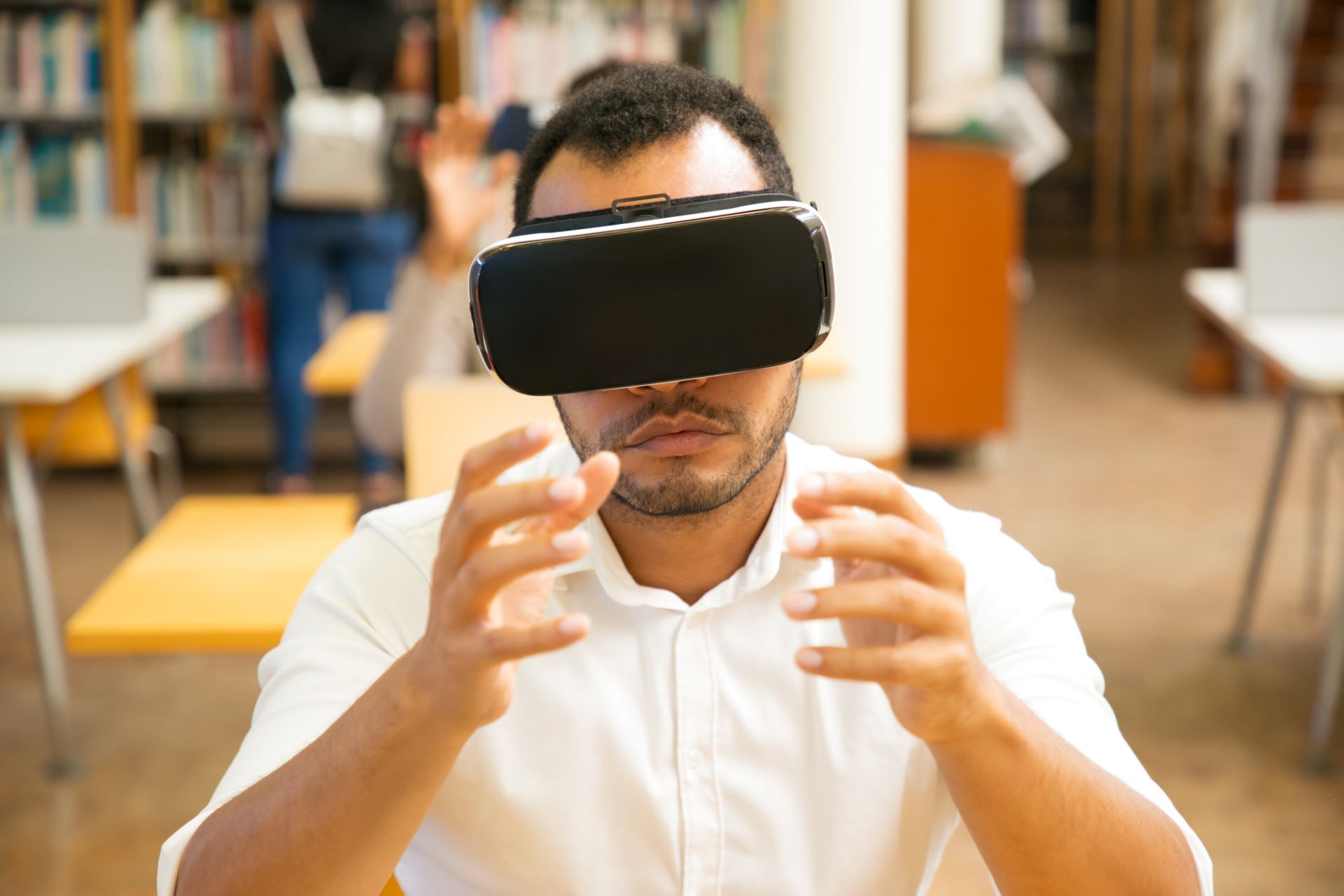
At its core, virtual reality places users inside digital environments where the brain responds as though the experience is real. This psychological principle — presence — is the cornerstone of VR’s effectiveness. When a user dons a headset and enters a virtual world, the sensory engagement goes beyond what a screen can offer. Sounds move with spatial accuracy; visuals respond to movement; feedback is immediate and contextual.
This level of immersion enables experiential learning in ways that textbooks and videos simply cannot. Humans learn best by doing, and VR provides the next best thing to real-world experience without the associated risks. Fear of public speaking, for example, can be practiced away in a virtual auditorium where mistakes have no career consequences. Leadership scenarios can be played out with diverse personalities and stressors that mimic boardroom dynamics.
This is not speculative. Numerous studies have shown that VR-based training can lead to measurable improvements in confidence, retention, and skill application. Unlike passive learning, immersive environments engage the body and mind, reinforcing neural pathways connected to memory and emotional regulation. In short: VR doesn’t just teach — it transforms.
Public Speaking: Facing Fear in Virtual Spaces
Public speaking sits near the top of most lists of common fears. The mere thought of an audience can trigger anxiety, increased heart rate, and cognitive overload. Traditional coaching often relies on theory, limited practice opportunities, or observation. VR enters the scene as a disruption — a platform where speakers can rehearse in front of dynamic, responsive virtual crowds.
Imagine stepping onto a stage filled with hundreds of attentive avatars. Some nod in interest, others look bored, and a few occasionally check their watches. This isn’t a game; it’s a rehearsal space engineered to provoke authentic emotional responses. Users practice pacing, eye contact, pitch, and even silence — all while a system tracks performance metrics like speech tempo and filler-word usage.
The real magic comes from repetition. In real life, securing a room full of people for practice is difficult and resource-intensive. In VR, every session is available on demand. Want to practice your keynote at 3 a.m.? Put on the headset. Prefer a hostile audience to test resilience? Select that environment too.
Research has shown that practicing in simulated environments can significantly reduce anxiety and improve delivery. Because VR can recreate the sensory load of live performance — sound, space, feedback — the brain learns to adapt. Over time, what was once fear becomes familiarity. In other words, virtual exposure leads to real-world confidence.
Leadership: Simulating Decisions and Developing Presence
Leadership is often described as a mixture of art and science. While theory can be taught, the nuanced application of those principles in high-stakes, social environments is harder to cultivate. Virtual reality’s ability to simulate complex interpersonal dynamics offers an unprecedented opportunity to develop leadership skills with precision and realism.
Consider a leadership scenario where a manager must navigate a conflict between team members, address underperformance, or pivot strategy mid-discussion. In VR, participants can step into these scenarios and interact with AI-driven characters that respond unpredictably. Each decision becomes a learning moment that shapes judgment, empathy, and strategic thinking.
What sets VR apart from role-playing exercises is consistency and scalability. A trainer can design scenarios that evolve based on choices, ensuring that each session tests different facets of leadership: active listening, negotiation, delegation, or crisis management. Participants receive feedback not only from the system but from real-world mentors who can review session recordings and performance analytics.
One of the most compelling aspects of VR leadership training is emotional intelligence development. Leadership is less about memorizing frameworks and more about understanding people. VR’s immersive social environments allow learners to practice reading tone, interpreting body language, and responding to emotional cues — skills that are often difficult to develop in classroom settings.
Cognitive Training: Strengthening the Mind Through Play
Cognitive health and performance have gained increased attention as drivers of productivity and quality of life. Memory, attention, problem-solving, and decision-making are cognitive domains that benefit from targeted practice. Virtual reality offers a unique edge here thanks to its immersive and adaptive nature.
In a virtual environment, tasks can be designed to challenge specific cognitive functions. For memory enhancement, users might navigate a complex maze while recalling spatial patterns. For attention and multitasking, environments can simulate bustling city streets where focus must be maintained amid distractions. For processing speed and problem-solving, puzzles can evolve in complexity based on user performance.
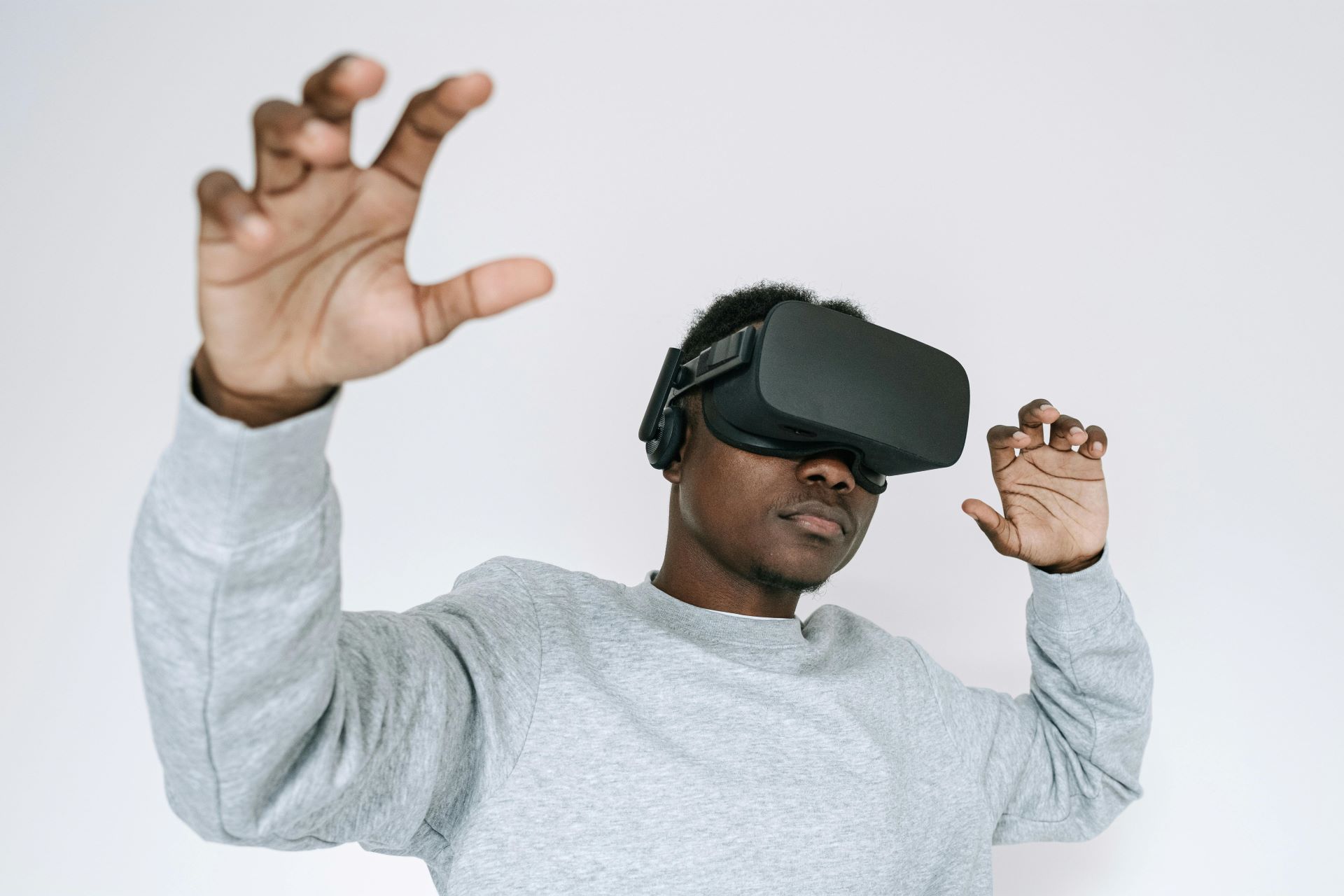
Unlike traditional brain-training apps, which often rely on two-dimensional exercises, VR places the user inside the challenge. This full-body engagement increases neural activation and reinforces learning. Because the environment can adapt in real time, tasks stay within an optimal difficulty range — not too easy, not too overwhelming. This balance is crucial for neuroplasticity — the brain’s ability to rewire itself.
A notable advantage of VR cognitive training is its appeal. Many people quit traditional cognitive exercises because they’re monotonous. VR, by contrast, can gamify the experience, making mental workouts engaging and even enjoyable. When users enjoy the process, they stick with it, and consistency leads to measurable gains over time.
Designing Effective VR Personal Development Tools
Creating effective VR tools for personal growth is both a science and an art. It begins with understanding human psychology: what motivates learners, how stress affects performance, and what kinds of feedback actually facilitate improvement.
User experience is paramount. If a tool is clunky or causes motion sickness, users won’t engage long enough to benefit. Developers invest heavily in ergonomic design, intuitive interfaces, and environments that feel real without being overwhelming. Audio design, spatial awareness cues, and natural interaction models all contribute to presence — the psychological magic that makes VR training effective.
Another important aspect is data. Behind the immersive worlds are analytics engines that track performance metrics. In public speaking VR, that might include speech pace, volume modulation, and gaze distribution. In leadership training, response times and choices are logged. In cognitive exercises, accuracy and adaptability are measured. These data provide actionable insights and help tailor future sessions.
Integration with coaching is also essential. VR doesn’t replace human mentors; it amplifies them. Many platforms allow coaches to review sessions, annotate performance, and guide learners based on objective data. This synergistic approach blends human wisdom with technological precision.
Real‑World Impact: Stories and Outcomes
Across industries, early adopters of VR personal development tools report tangible benefits. Sales teams practice pitches in virtual showrooms before meeting clients. Executives refine conflict resolution skills in lifelike simulations. Students overcome stage fright through repeated virtual performances. Individuals seeking cognitive enhancement report sharper focus and better memory recall after consistent VR training.
One professional speaker described her first VR session as “standing in front of my greatest fear with zero safety net.” After weeks of practice in customized environments, she noted significant improvement both in her confidence and her ability to read audience reactions in real world presentations. Another leader credited VR scenario training with helping her navigate an unexpected crisis at work, saying the simulation had prepared her emotional and cognitive mindset for ambiguity.
These outcomes aren’t anecdotal outliers. Research institutions and corporate training programs increasingly incorporate VR into curricula with measurable success. The shared theme across these stories is experiential growth — learning that sticks because it feels real, challenging, and relevant.
Accessibility and the Future of VR Development
Once confined to expensive hardware and specialist installations, VR is becoming increasingly accessible. Standalone headsets, improved motion tracking, and wireless solutions have lowered barriers to entry. As technology evolves, quality experiences become more affordable and scalable.
We can anticipate even more sophisticated tools driven by artificial intelligence, adaptive feedback systems, and cross‑platform integrations. VR may soon integrate biometric data to adjust scenarios based on stress levels. Social VR spaces will allow distributed teams and learners to interact in shared immersive environments, bridging physical distance with psychological presence.
Ultimately, virtual reality is not a replacement for human development practices but an expansion. It complements coaching, mentoring, real‑world experience, and reflective learning. By offering a bridge between theory and lived experience, VR empowers individuals to build confidence, sharpen skills, and explore growth in ways once relegated to imagination.
Virtual reality is transforming personal development by making the intangible tangible. It immerses learners in experiences that teach resilience, presence, clarity, and cognitive agility. Whether practicing a keynote address in front of a digital stadium, navigating leadership dilemmas with responsive avatars, or challenging cognitive limits in dynamic environments, VR equips users with the rehearsal space of the future.
The journey from novice to confident communicator, strategic leader, or cognitively agile thinker is rarely linear. But with virtual reality, it becomes navigable, measurable, and deeply personal. As technology continues to evolve, so too will the landscapes in which we grow. And perhaps, in those pixelated horizons, we’ll find not escape from reality, but an enhanced path back into it — wiser, stronger, and ready.