

Why AR and VR Are Converging Faster Than Expected
Date Published

For years, augmented reality and virtual reality were treated like distant cousins at a family gathering. Related, yes, but seated at opposite ends of the table. AR was positioned as the practical one, grounded in the real world, layering digital information onto physical space. VR was the escapist, sealing users inside fully synthetic environments that felt closer to science fiction than everyday computing. Analysts, developers and hardware manufacturers all agreed on one thing: convergence would come eventually, but not soon.
That assumption has aged badly.
Today, the boundary between AR and VR is dissolving at a pace that has surprised even the companies building the hardware. What once required separate devices, distinct software pipelines and entirely different user expectations is rapidly collapsing into a single category often described as mixed reality, spatial computing or extended reality, depending on who is doing the marketing. The labels matter less than the outcome. One device can now slide between realities with barely a flicker, moving from immersive virtual worlds to context-aware digital overlays in seconds.
This convergence is not accidental, nor is it purely technological bravado. It is the result of practical pressures, economic realities and a growing understanding that humans do not want multiple headsets for multiple digital lives. They want a single interface that adapts to their needs, whether that means attending a virtual meeting, visualising data in their living room or escaping into a fully realised metaverse environment.
The speed of this convergence is reshaping how we think about VR, the metaverse and the future of personal computing itself. To understand why it is happening so quickly, and why it now feels inevitable, we need to look at how these technologies evolved, where their differences once mattered, and why those differences are rapidly losing relevance.
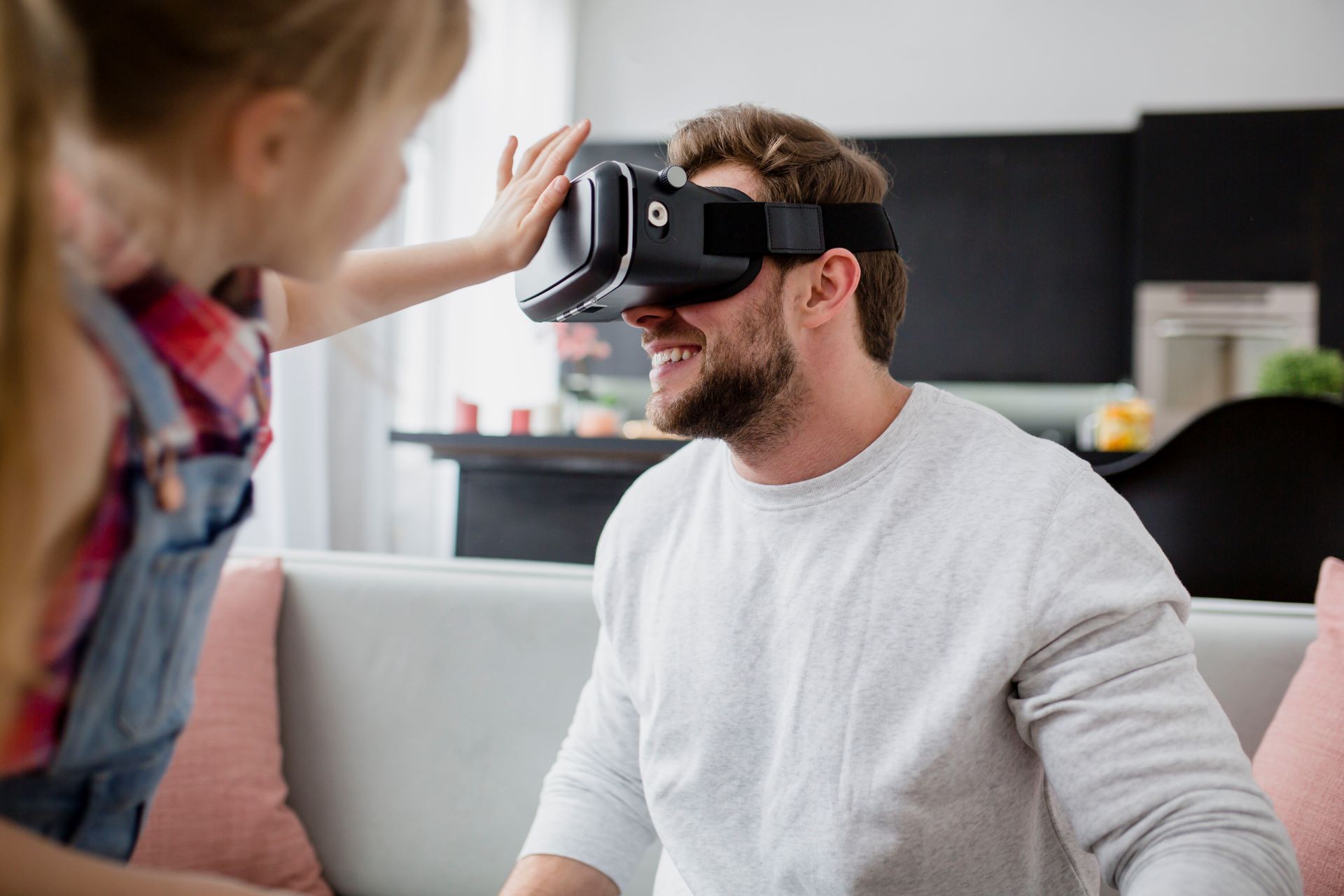
When AR and VR Needed to Be Different
In the early days of immersive technology, separation was not just conceptual, it was necessary. The hardware constraints alone forced a clear divide. Virtual reality demanded high-resolution displays, wide fields of view and enough processing power to render entire worlds at stable frame rates. Augmented reality, on the other hand, prioritised transparency, environmental awareness and spatial mapping, often at the cost of immersion.
These differing requirements led to very different devices. VR headsets were bulky, enclosed and isolating. They blocked out the physical world entirely, creating a sense of presence that was powerful but limiting. AR devices, whether smartphone-based or experimental smart glasses, aimed to be lightweight and socially acceptable, often sacrificing visual fidelity in exchange for comfort and practicality.
Software followed the same split. VR applications were built around total immersion, whether for gaming, simulation or virtual social spaces. AR applications focused on utility, navigation, data visualisation and light interaction with the physical world. Even development tools reinforced this divide, with separate frameworks, design principles and interaction models.
For a time, this separation made sense. The use cases were different enough, and the technical challenges significant enough, that convergence felt more like a distant ambition than a realistic roadmap. AR would slowly integrate into daily life through phones and glasses, while VR would remain a specialised medium for entertainment, training and niche professional applications.
That narrative no longer holds.
Mixed Reality: Not a Compromise, but a Synthesis
The idea of mixed reality is often misunderstood as a midpoint between AR and VR, a diluted version of both that fails to fully satisfy either camp. In practice, the opposite is happening. Mixed reality is not about meeting in the middle. It is about expanding outward, absorbing the strengths of both approaches into a more flexible and powerful whole.
Modern headsets can now pass through the physical world using high-resolution cameras, reconstructing real environments in real time. This allows users to remain visually aware of their surroundings while digital objects are anchored convincingly in physical space. With a simple interface change, that same device can transition into full virtual reality, replacing the physical world entirely with a synthetic one.
This fluidity changes how users think about immersion. Instead of choosing between reality and virtuality, they can move along a spectrum. A workspace might begin as an augmented overlay on a real desk, then gradually fade into a fully virtual environment as focus deepens. A social experience might start with avatars floating in a living room, then expand into a shared virtual venue that bears no resemblance to physical space at all.
Crucially, this synthesis is happening without forcing users to learn entirely new interaction models for each mode. Hand tracking, eye tracking and spatial audio function consistently across experiences, reinforcing the idea that AR and VR are no longer separate destinations, but different expressions of the same underlying system.
Hardware Economics Are Forcing Convergence
One of the least romantic but most decisive factors driving this convergence is cost. Developing and manufacturing separate AR and VR devices is expensive, particularly when both markets are still emerging. Maintaining parallel hardware lines, software ecosystems and developer communities stretches resources thin, even for the largest technology companies.
By converging on a single hardware platform capable of supporting multiple realities, manufacturers reduce complexity while increasing potential value for users. A headset that only does VR is a harder sell in a world where people already own multiple screens. A device that can replace a monitor, enhance the physical environment and provide deep immersion becomes easier to justify.
Advances in display technology, camera systems and processing efficiency have made this consolidation feasible. High-resolution displays can now support both immersive VR and readable AR overlays. Inside-out tracking systems serve both use cases without modification. Dedicated chips for computer vision and spatial mapping handle environmental awareness alongside real-time rendering.
The result is a new class of devices that are no longer defined by what they exclude, but by what they can adapt to. From a business perspective, this adaptability is not just attractive, it is essential. It allows companies to iterate faster, target broader markets and future-proof their platforms against shifts in consumer behaviour.
The Metaverse Demands Flexibility, Not Purity
The evolving concept of the metaverse has also accelerated the convergence of AR and VR. Early visions of the metaverse often leaned heavily toward fully virtual worlds, accessed primarily through VR headsets. These spaces promised persistent digital environments where users could work, play and socialise without the constraints of physical reality.
While compelling, this vision underestimated the value of physical context. People do not live entirely in virtual spaces, nor do they want to abandon their surroundings to participate in digital culture. The most sustainable metaverse experiences are those that respect and integrate with the physical world rather than attempting to replace it wholesale.
Mixed reality offers exactly this balance. It allows metaverse content to appear within physical environments, blending digital presence with real-world awareness. Virtual avatars can share space with real furniture. Persistent digital objects can exist in specific locations, accessible through both AR and VR modes. A single identity can move seamlessly between fully virtual spaces and augmented physical ones.
This flexibility aligns more closely with how humans actually behave. We shift between contexts constantly, moving from focused work to casual interaction to entertainment. A metaverse that requires total immersion at all times is inherently limiting. One that adapts to context becomes far more compelling.
As metaverse platforms mature, the need for devices that can support this full spectrum of engagement becomes unavoidable. Convergence is no longer a technical curiosity, but a foundational requirement.
Software Is Catching Up to the Vision
Hardware convergence would mean little without corresponding advances in software. Fortunately, the software ecosystem is evolving just as rapidly. Development platforms now increasingly treat spatial computing as a unified discipline rather than a collection of isolated modes.
Game engines and spatial frameworks support shared codebases that can deploy experiences across AR, VR and mixed reality with minimal modification. Interaction systems are becoming more abstract, allowing developers to define behaviours that respond dynamically to context rather than hardcoding for a single reality type.
This abstraction encourages experimentation. Developers can design experiences that begin in AR and transition into VR without forcing users through jarring interface changes. Tools for spatial mapping, occlusion and physics behave consistently across modes, reinforcing the sense of a continuous digital layer rather than separate environments.
Importantly, this convergence lowers barriers to entry. Developers no longer need to choose sides early in the creative process. They can build for a spectrum of experiences, adjusting immersion levels based on user preference, hardware capability or situational context.
As more applications adopt this approach, user expectations shift. People begin to assume that digital experiences should adapt to their environment rather than demanding total commitment. This expectation, once established, further accelerates convergence by making single-purpose devices feel increasingly outdated.
Social and Professional Use Cases Are Overlapping
Another force driving convergence is the blurring of lines between social, professional and entertainment use cases. Virtual reality was once dominated by gaming and simulation, while AR found its footing in enterprise applications like maintenance, training and navigation. Today, these domains are colliding.
Remote collaboration tools now leverage mixed reality to create shared workspaces where digital content coexists with physical surroundings. Virtual meetings can take place around real tables, enhanced with holographic data visualisations. Training simulations can begin with augmented instructions in a real environment before transitioning into fully virtual scenarios for complex tasks.
Social experiences follow a similar pattern. Friends might gather virtually in a shared AR space that overlays their real rooms, then collectively enter a fully virtual world for a game or event. The distinction between work and play becomes less rigid, particularly as digital spaces grow more persistent and socially rich.
These overlapping use cases benefit enormously from a single, adaptable device. Switching hardware or interfaces mid-experience disrupts flow and undermines the sense of presence. Converged systems allow experiences to evolve naturally, reflecting the fluid nature of human interaction.
Human Perception Favors Continuity
Beyond technology and economics, there is a deeper reason why AR and VR are converging so quickly. Human perception is not binary. We do not experience the world as either real or virtual, but as a continuous blend of sensory inputs, attention and imagination.
Mixed reality aligns more closely with this perceptual reality. It allows digital content to coexist with physical stimuli, reinforcing rather than replacing our sense of space. Transitions between levels of immersion feel more natural when they mirror how attention shifts in everyday life.
This perceptual continuity reduces cognitive friction. Users are less likely to feel disoriented or fatigued when experiences respect spatial cues and physical context. Over time, this comfort becomes a decisive factor in adoption, particularly for devices intended for extended use.
As designers and researchers better understand these dynamics, they increasingly favour approaches that blur boundaries rather than enforce them. Convergence becomes not just a technical achievement, but a human-centred design principle.
One Device, Many Realities
The phrase “one device, many realities” is more than a marketing slogan. It captures a fundamental shift in how we think about computing interfaces. Just as smartphones consolidated cameras, music players, GPS devices and communication tools into a single object, mixed reality headsets are consolidating digital experiences that were once siloed.
This consolidation changes the competitive landscape. Success is no longer measured by how well a device performs in a single mode, but by how gracefully it transitions between them. Comfort, battery life, visual clarity and interaction consistency become more important than raw immersion alone.
For users, this means fewer decisions and fewer compromises. They no longer need to choose between AR and VR, or between productivity and entertainment. The device adapts, responding to context, intention and environment.
For the metaverse, it means broader accessibility. Experiences can scale their immersion based on user comfort and hardware capability, welcoming participants who might otherwise be excluded by fully immersive requirements.
The Speed of Convergence Is the Real Surprise
Perhaps the most striking aspect of this evolution is how quickly it is happening. What once seemed like a decade-long journey is unfolding in a matter of years. Part of this acceleration comes from technological maturity, but part of it comes from a collective realisation that separation was never the end goal.
As soon as the technical barriers began to fall, the logic of convergence became undeniable. The benefits were too significant, the efficiencies too compelling and the user experience too aligned with human behaviour to ignore.
In hindsight, the question is not why AR and VR are converging so fast, but why we ever expected them to remain apart.
The Future Is Not AR or VR, but Both
The convergence of augmented reality and virtual reality marks a turning point in the evolution of immersive technology. It signals a move away from rigid categories and toward adaptable systems that reflect how people actually live, work and connect.
In this future, devices are not defined by a single reality, but by their ability to navigate many. The metaverse is not confined to virtual worlds, nor is AR limited to practical overlays. Together, they form a continuum of experience, accessible through unified platforms that prioritise flexibility over purity.
As this convergence continues, the most successful technologies will be those that disappear into the background, allowing users to move effortlessly between realities without friction or fuss. One device, many realities, not as a promise, but as an everyday expectation.
The line between AR and VR is no longer fading. It has already vanished.