

Why Franchises Use VR to Enforce Brand Consistency
Date Published

Brand consistency as a franchise risk
For franchises, brand consistency is not a marketing preference. It is a commercial necessity and a legal obligation rolled into one. Every customer-facing interaction, from how a product is prepared to the tone of a greeting at the counter, reinforces or erodes brand value. In a centrally managed organisation, deviations can be corrected quickly. In a franchise network spread across regions, countries and regulatory environments, variation is inevitable and expensive.
Historically, franchises have relied on manuals, in-person training sessions and periodic audits to maintain standards. These approaches work, but they scale poorly. Training documents are interpreted differently by different people. In-person sessions are costly, time-bound and difficult to repeat consistently. Audits identify problems after the damage has already been done. As franchise networks grow, these weaknesses compound into operational risk.
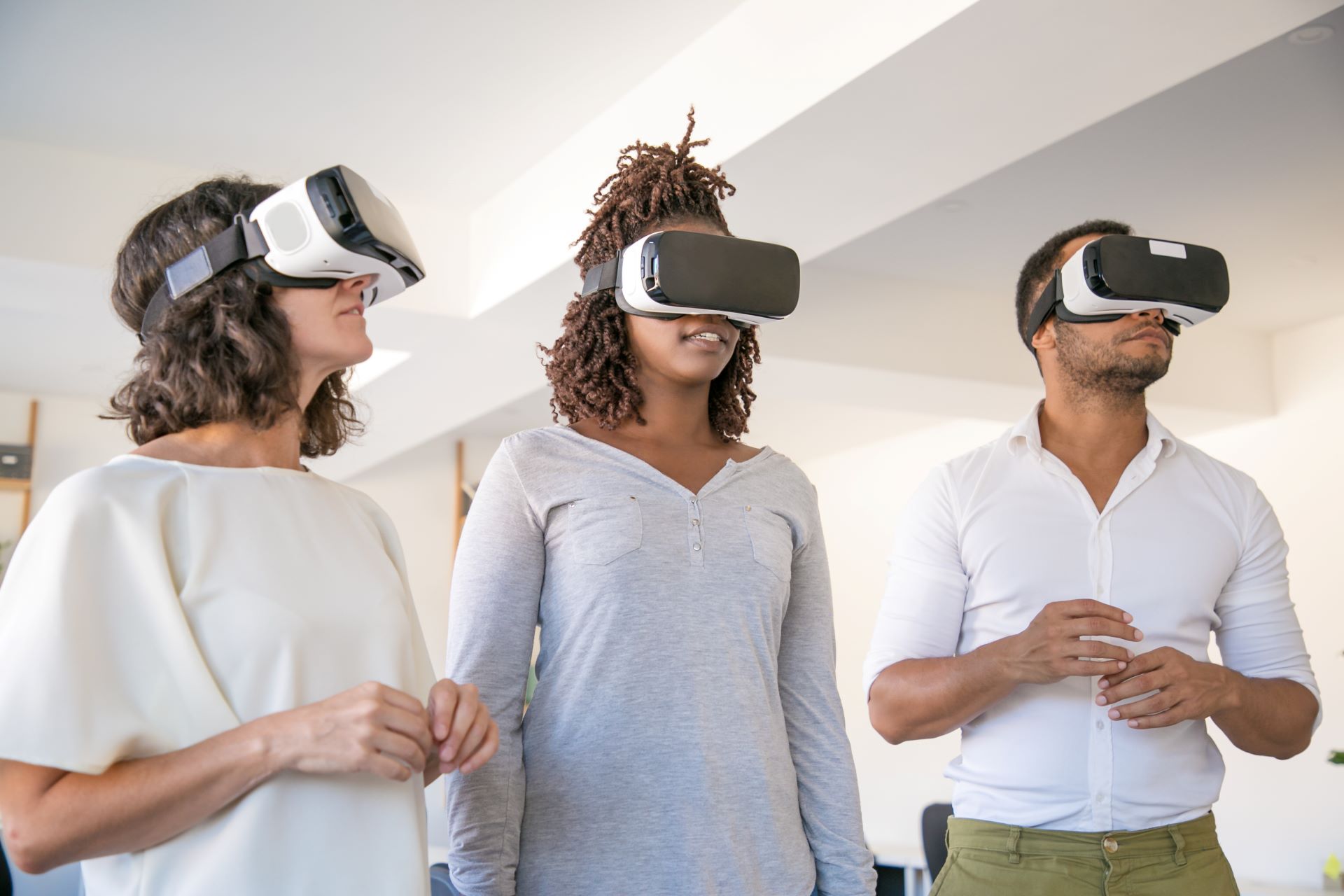
Virtual reality is emerging as a way to reduce that risk at the source. By standardising how training is delivered and how brand environments are experienced, VR allows franchises to enforce consistency before staff ever interact with a customer. The technology does not just explain brand standards. It places employees inside them.

The limitations of traditional franchise training
Traditional franchise training has always faced a paradox. It needs to be uniform enough to protect the brand, yet flexible enough to accommodate local contexts and individual learning styles. Most systems resolve this tension by leaning heavily on documentation, supplemented by classroom sessions or online modules. The result is often compliance without comprehension.
Two employees can complete the same e-learning module and emerge with very different understandings of what “on-brand” behaviour looks like in practice. Videos and slide decks flatten complex, situational decisions into abstract rules. They rarely capture the nuance of a busy store, a difficult customer interaction or the subtle cues that define brand tone.
There is also the issue of decay. Knowledge gained during onboarding fades over time, particularly when it is not reinforced through practice. Franchises attempt to counter this with refresher courses, but these introduce additional costs and logistical challenges. For multi-site operators, even minor inconsistencies in how refresher training is delivered can reintroduce variation.
VR changes this equation by shifting training from passive consumption to active experience. Instead of reading about brand standards, employees rehearse them in environments designed to mirror real-world conditions with precision.
VR as a standardised training environment
At its core, virtual reality offers something traditional training cannot: a fully controlled, repeatable environment. Every trainee enters the same virtual store, uses the same equipment, encounters the same scenarios and receives feedback based on identical criteria. This level of standardisation is particularly valuable for franchises, where variability is the primary enemy.
In a VR training module, a coffee franchise can ensure that every barista practices drink preparation using the same virtual machines, the same ingredient placement and the same workflow. A retail brand can guide staff through store layouts that reflect exact visual merchandising standards, down to shelf spacing, lighting and signage placement. A hospitality franchise can simulate front-of-house interactions that reflect approved language, posture and service timing.
Because these environments are digital, they can be updated centrally. When brand standards change, the virtual environment changes with them. There is no lag between policy updates and training materials reaching the field. Every new trainee, regardless of location, receives the most current version of the brand experience.
Risk reduction through experiential learning
From a risk perspective, the most compelling advantage of VR is that it allows mistakes to happen safely. In traditional training, errors are either theoretical or they occur on the job, where consequences can include customer dissatisfaction, regulatory breaches or safety incidents. VR shifts this learning curve into a controlled space.
Employees can practice high-risk or high-stakes scenarios repeatedly without exposure to real-world consequences. For franchises operating in regulated industries, such as food service, healthcare or automotive, this is particularly significant. Compliance failures in these sectors carry legal and financial penalties that extend beyond a single location.
By embedding compliance requirements directly into VR scenarios, franchises can ensure that correct procedures are not just understood but internalised. Hygiene protocols, safety checks and escalation processes become muscle memory rather than abstract rules. This reduces the likelihood of incidents across the network and provides a defensible training record if compliance is ever questioned.
Distributed networks and the problem of interpretation
One of the hidden risks in franchise systems is interpretation drift. Even when guidelines are clear, local trainers and managers inevitably add their own emphasis, shortcuts or explanations. Over time, these small deviations accumulate into measurable brand inconsistency.
VR reduces interpretation drift by removing intermediaries from the training process. The experience itself becomes the trainer. While human facilitation still plays a role, the core message is delivered directly by the brand through the virtual environment.
This is especially valuable in international franchise networks, where language, culture and labour practices vary. VR experiences can be localised linguistically while preserving the same visual and procedural standards. The store still looks the same. The workflow still follows the same logic. The brand behaviour still feels consistent, even when delivered in different languages or cultural contexts.
Measuring consistency in a virtual world
Another advantage of VR is its ability to generate data. Traditional training methods provide limited insight into how well standards are being absorbed. Completion rates and quiz scores offer surface-level metrics, but they rarely reflect real-world performance.
VR platforms can track detailed behavioural data. They can measure how long a trainee takes to complete a task, where they hesitate, which steps they repeat and where errors occur. Across a franchise network, this data reveals patterns that would otherwise remain invisible.
If multiple locations struggle with the same procedure, the issue may lie in the training design or the operational process itself. If performance varies by region, targeted interventions can be deployed. This transforms training from a static requirement into a dynamic risk management tool.
Over time, franchises can use this data to refine both their virtual training environments and their real-world operations. Brand consistency becomes something that is monitored continuously, not just audited periodically.
VR and the onboarding bottleneck
Onboarding is one of the most vulnerable points in a franchise system. New employees form habits quickly, and early experiences shape long-term behaviour. Inconsistent onboarding leads to inconsistent performance, which is difficult to correct later.
VR allows franchises to deliver a uniform onboarding experience regardless of hiring volume or location. Seasonal staff, rapid expansion and high turnover no longer require proportional increases in training resources. A new hire can be immersed in the brand environment on their first day, guided through core tasks and exposed to expected behaviours before interacting with customers.
This reduces reliance on peer-led training, which is efficient but highly variable. While mentorship remains important, VR ensures that the foundational understanding of the brand is consistent across the network.
Technology maturity and scalability
Early VR deployments were often criticised for being expensive, complex and difficult to scale. That perception is increasingly outdated. Advances in standalone headsets, cloud-based content management and enterprise VR platforms have lowered barriers to entry.
For franchises, scalability is critical. Training solutions must be deployable across dozens or hundreds of locations with minimal technical overhead. Modern VR systems can be centrally managed, with content updates pushed remotely and usage monitored in real time.
The cost profile also aligns with franchise economics. While there is an upfront investment in content development, the marginal cost of deploying VR training to additional locations is relatively low. When compared to recurring travel, instructor fees and operational disruption associated with traditional training, VR often presents a compelling long-term value proposition.
Enforcing environments, not just behaviours
Brand consistency is not limited to what employees do. It extends to the physical environment in which those actions occur. Store layout, equipment placement and visual cues all influence customer perception and staff behaviour.
VR enables franchises to enforce environmental standards with a level of precision that static plans and photos cannot achieve. Franchisees and managers can walk through virtual store designs before construction or refurbishment begins. This reduces the risk of costly deviations and ensures that brand guidelines are understood spatially, not just conceptually.
For existing locations, VR can be used to train staff on new layouts, seasonal changes or product launches. The environment becomes familiar before it exists in the real world, reducing disruption during rollouts.
The future of franchise control
As franchise networks continue to expand, the tension between autonomy and control will intensify. Franchise models depend on local entrepreneurship, but brand value depends on uniformity. VR offers a way to reconcile these forces by standardising the non-negotiables while leaving room for local adaptation elsewhere.
By embedding brand standards into immersive experiences, franchises move from enforcement to alignment. Employees do not just know the rules. They experience what right looks like. From a risk perspective, this is a profound shift.
Virtual reality will not replace all forms of training or oversight. However, as a tool for enforcing brand consistency across distributed networks, its strengths align closely with the core challenges franchises face. In an environment where reputation, compliance and customer trust are increasingly fragile, reducing variability is not optional.
For many franchise operators, VR is no longer an experimental technology. It is becoming an operational safeguard, designed to protect the brand by making consistency the default outcome rather than a constant struggle.