

How VR Is Quietly Transforming Corporate Training KPIs
Date Published

The Silent Revolution in Training
Corporate training has always been a balancing act. Companies strive to maximize efficiency while ensuring employees truly absorb and retain knowledge. Yet traditional methods—lectures, slide decks, even e-learning—often fall short when it comes to measuring real-world impact. Enter virtual reality. Once considered a novelty, VR is quietly reshaping corporate training KPIs by making learning more measurable, immersive, and outcome-driven.
While the surface appeal of VR lies in its futuristic technology, the real value emerges in its ability to deliver actionable insights. Training teams can now track progress in ways previously impossible: the time it takes to complete tasks, the accuracy of performance, and the long-term retention of knowledge. This is not just training for engagement—it’s training designed to transform measurable business outcomes.
VR and the Metric of Time
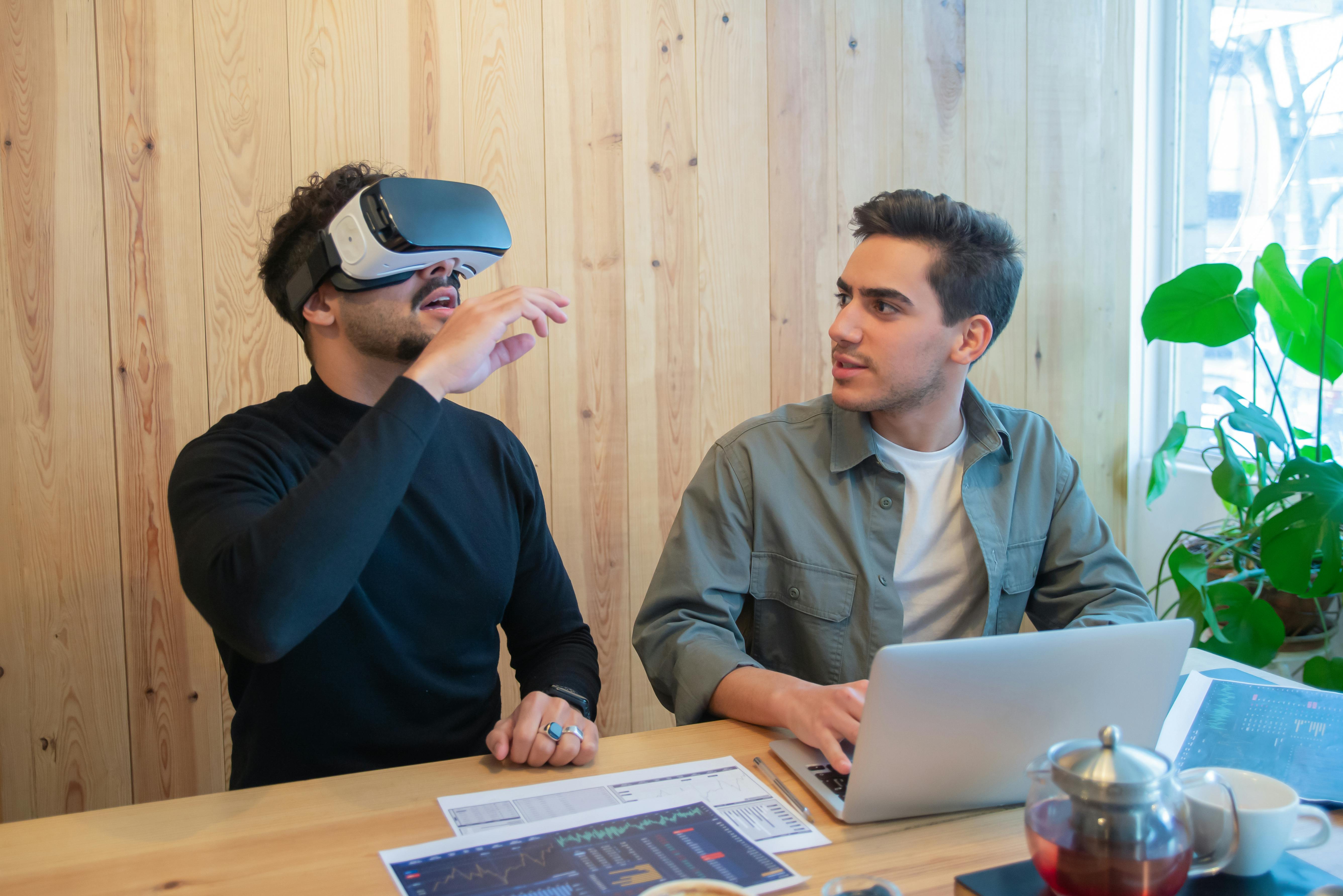
One of the most immediate ways VR impacts corporate training is through efficiency. Time is money, and VR training modules are increasingly designed to reduce the hours employees spend in traditional classrooms. Simulations allow trainees to practice complex tasks in a condensed timeframe, with instant feedback loops replacing the lag of human instructors.
Consider a warehouse scenario: a VR program can simulate forklift operations or inventory management without a single product being misplaced. The system records each attempt, providing managers with precise data on how quickly employees achieve competence. Over time, trends emerge, highlighting which modules accelerate learning and which require adjustment.
This metric-driven approach fundamentally alters how organizations allocate resources. Time-to-competency becomes a measurable KPI rather than an abstract goal. Instead of estimating training durations, companies can plan schedules and budgets based on real VR data, making workforce development more predictable and cost-effective.
Accuracy: The Precision of VR Feedback
Beyond speed, accuracy is the second pillar of VR-driven KPI transformation. Traditional assessments often rely on theoretical knowledge or subjective evaluation. VR, by contrast, creates a controlled environment where every action is logged, analyzed, and compared against predefined performance benchmarks.
In fields such as healthcare or industrial maintenance, accuracy isn’t just desirable—it’s critical. VR simulations provide immediate error tracking, showing not only whether a task is completed correctly but also how it was performed. A surgeon-in-training, for instance, can repeat procedures virtually, receiving granular feedback on precision, hand placement, and technique without risk to patients.
This granular data allows organizations to set performance-based KPIs that were previously difficult to quantify. Error rates, procedural compliance, and consistency become standard metrics, creating a culture where measurable improvement drives operational excellence. VR transforms training from a subjective experience into a disciplined, data-driven process.
Retention: Learning That Sticks
While speed and accuracy are vital, the ultimate goal of any training program is retention—ensuring that employees retain knowledge and skills over time. VR leverages immersive learning to embed experiences deeply in memory. By engaging multiple senses simultaneously, VR training helps learners internalize procedures in a way static materials cannot.
Studies indicate that retention rates improve significantly when learners actively interact with content rather than passively observe it. VR simulations force participants to respond in real-time, creating mental muscle memory. When combined with measurable performance analytics, organizations can quantify retention by tracking repeated competency over weeks or months.
Retention KPIs provide actionable insights into long-term learning outcomes. Which modules yield lasting results? Which concepts need reinforcement? VR platforms can now deliver periodic refresher simulations, tailored to individual performance gaps, ensuring continuous learning that aligns with business objectives.
The Analytics Behind VR Training
VR’s true power lies not only in immersive experiences but in the analytics ecosystem that accompanies it. Modern VR platforms integrate sophisticated dashboards that track progress across multiple KPIs, translating behavior into actionable intelligence.
Completion times can be benchmarked across departments.
Accuracy scores highlight training bottlenecks.
Retention curves reveal the long-term efficacy of learning content.
These insights empower leaders to refine training strategies continuously. Investment decisions are no longer guesswork; they are informed by precise, real-world evidence. Training becomes a strategic lever for operational improvement, rather than a checkbox exercise.
Case Studies: Measuring VR Impact in Real Time
Several forward-thinking organizations are already experiencing measurable ROI from VR-driven training. A leading automotive manufacturer reduced assembly-line onboarding time by 30%, while simultaneously cutting error rates in high-precision tasks. Similarly, a global pharmaceutical company reported improved knowledge retention among sales representatives, with VR modules outperforming traditional classroom sessions by a measurable margin.
These results underline a critical truth: VR is not a flashy addition to corporate learning—it is a tool for measurable transformation. KPIs once deemed difficult to influence are now under the direct control of training teams, thanks to immersive, data-rich learning environments.
Looking Ahead: The KPI-Driven Future of Training
As VR technology continues to evolve, its integration into corporate training will become increasingly sophisticated. AI-driven adaptive simulations will personalize learning pathways, while predictive analytics will anticipate skill gaps before they manifest. The next generation of KPIs may include real-time cognitive load measurement, emotional engagement, and scenario adaptability—metrics that were unimaginable in traditional training formats.
Organizations that embrace VR today position themselves at the forefront of this KPI-driven revolution. They are not merely investing in technology; they are investing in measurable human capital development. The quiet transformation of training metrics is proof that the future of corporate learning is immersive, analytical, and undeniably results-oriented.
From Novelty to Necessity
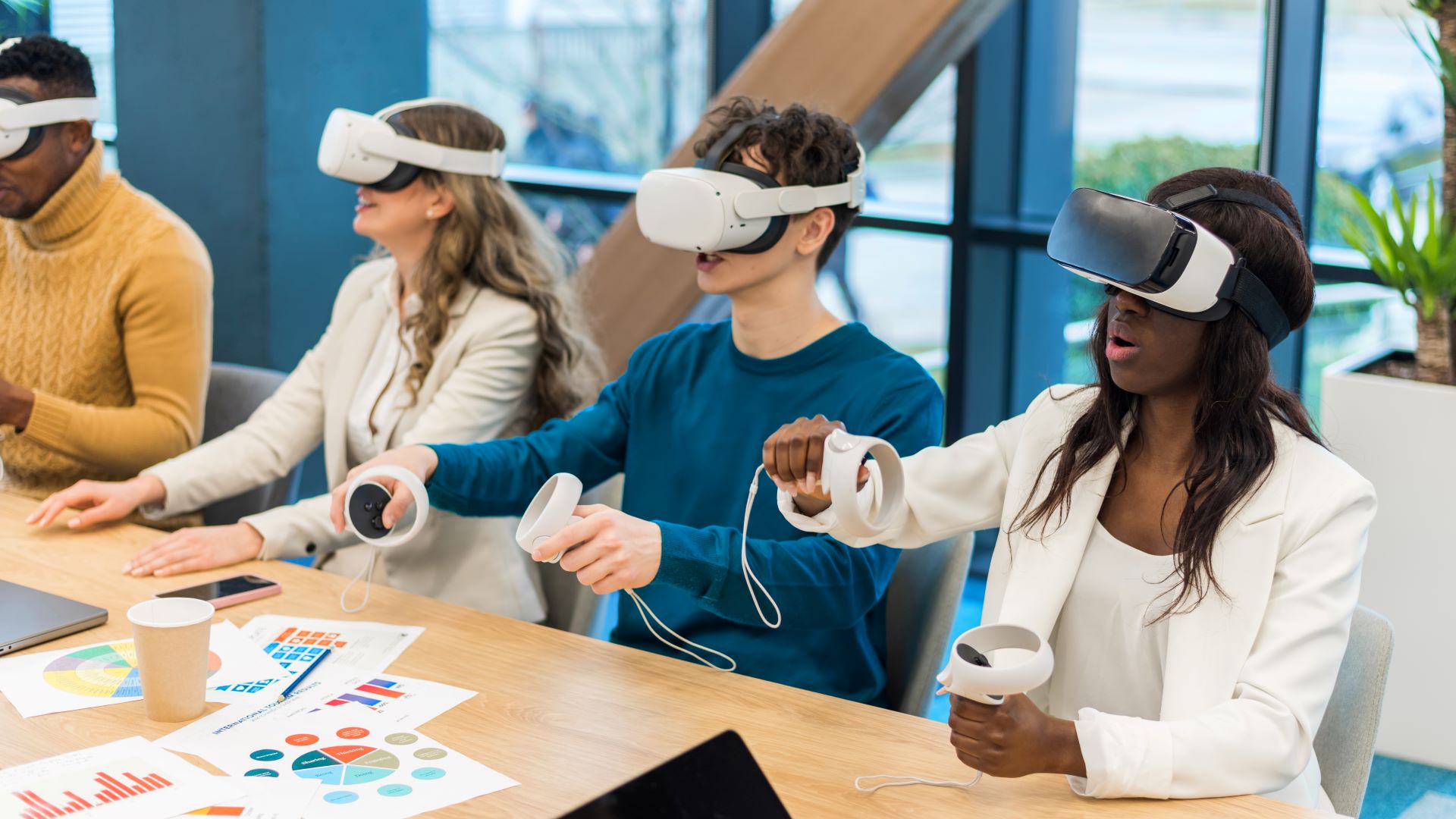
Virtual reality is no longer a novelty—it is a strategic tool that fundamentally reshapes corporate training KPIs. By enhancing efficiency, precision, and retention, VR empowers organizations to measure and improve learning outcomes in ways traditional methods cannot. The metrics are clear, the evidence compelling, and the implications profound. Corporate training is entering a new era—one where every action, every decision, and every skill learned can be quantified, optimized, and leveraged for tangible business impact.